Showing posts with label Writing Tips. Show all posts

Wednesday, November 13, 2013

Writing through the pain: What happens when real life overshadows the happily ever after? -- by Tina Vaughn


Three months ago on August 13, my husband, ten-year-old daughter and I were busy getting ready for the arrival of our newest family member, a darling baby girl who seemed to enjoy tap-dancing in my ever-growing belly.

On August 14, she died.

This isn't a post about stillbirth. Or heartbreak. Or grief. I'll save those painful thoughts and dark musings for my private journals.

This post is about writing romance. Plain and simple.

How can we continue to write the happily ever after when real-life tragedy strikes?

I'll preface the following suggestions with this disclaimer: I'm not an expert…on anything. These are just a few tips that, in recent weeks, have helped me start writing again.

  1. Find support. Surround yourself with people who love to read and write and friends and family who encourage and uplift you and your craft. This will help you stay motivated.

  2. Write sad scenes. Write angry scenes. Write the Black Moment. It's so difficult to write those sexy scenes and sweet romantic moments when your heart is breaking. Pour that emotion into your writing. Fiction is a perfect outlet for your grief, frustration and anger.
  1. Listen to some of your favorite songs or playlists. Watch one of your favorite romantic movies. Read a new book you've been looking forward to. Re-read one of your favorites. Go for a walk or run. Find inspiration wherever and whenever you can.
  1. If you typically write in front of the computer, then scribble in a notebook or journal instead. This small change may be just the spark you need.
  1. Set goals. If you are published and have an editor, then chances are you already have deadlines, which will help keep you on track. If you're unpublished, set your own deadlines. Want that chapter finished in five days? Mark it on your calendar and make a commitment to meet that goal.
  1. Take a break. You may not have the time, energy or desire to write. That's fine. Give yourself permission to rest…for a while. But don't wait too long. A prolonged absence from your work in progress may make it harder for you to resume your writing.


What helps or motivates you when writing gets tough?

What do you do when real life intrudes on your fiction world?

What are your suggestions for overcoming or using your own grief, and other emotions, in your writing?

Wednesday, October 2, 2013

Writing on a Schedule, by Olivia Miles


In an ideal world, you pick up a pen when inspiration strikes and furiously scribble three pages of perfect prose and then sit back and sigh. You wake up in the dead of night with a brilliant idea and rush to your computer and let the words just flow from your fingertips. You wait for your muse to appear before starting your next book, however long it may take. While all of the above can happen, this approach is not exactly realistic when you are writing on a deadline or writing more than one book a year.

So what do you do instead? You schedule your writing. I know, I know, it doesn’t exactly sound romantic, but that doesn’t mean it has to be forced, either. (Well, sometimes it might feel that way, but that’s when I remember that writing is work!)

For the next 14 months, I have multiple books scheduled to write, and multiple books scheduled for release. I’ve played with my schedule, rearranged a few things, accounted for a few more, and settled on a monthly plan that allows me to meet my goal. I think the first step to take when scheduling your writing is knowing what you can accomplish in a given time frame. Several writers keep track of their daily word count, myself included, and while this is a great tool for motivation, it’s also essential in planning your projects. Knowing what you typically average per week allows you to more confidently suggest a delivery date to your editor. It also allows you to plan your career for as much as a year or even two years out. In an industry where books are written long before they hit the shelves, knowing what you can produce in a given 12-month time frame can help shape your long-term career goals. 

Of course there are other factors that need to be taken into consideration: revisions, line edits, even blog tours and promotion can eat up a lot of the day and cut into writing time. I'm a planner (in case you haven't noticed) and so I factor time into my schedule to outline - I usually spend a solid three days outlining a project before I start writing. On the weeks where my daughter has school vacations, I have to conservatively assume I will produce absolutely nothing, and on days where I am knee-deep in revisions, I know my word count is going to take a setback. 

Anticipated release dates are also something I take into consideration when scheduling my writing. When I’m writing a Christmas book, for example, I try and schedule as far out from the season as possible, if not the year before. Sometimes an editor will suggest a window for release, and once again, this would factor into the order of projects on the schedule. 

Yes, it would be nice to only write when the mood strikes me, or to only work on the project I am most interested in at the moment, but I just don't think I would meet my goals that way. Maybe I take too much of a business approach to my creative side, maybe I've even taken some of the fun and spontaneity out of the process, but goal setting and project planning are what keep me focused. All in all, I try to be realistically ambitious with my writing schedule, and having a month by month calendar breaks it all down into an organized, achievable system. Without it...I'd be mess!

So how about you, are you juggling multiple books? How do you plan your writing schedule?

Wednesday, September 18, 2013

Ready, Set….Write by Jennifer Faye

Umm…not so fast. At least not for me.

In two weeks, SNOWBOUND WITH THE SOLDIER is going to be available online and on store shelves. I'm busy getting ready to for a blog tour to celebrate my second release. And today I received my AA’s (author alliterations) for SAFE IN THE TYCOON’S ARMS. It will be available March 2014. :-) 

But aside from all of that, I’m starting to write my fourth book. And with this book, I’m really starting to take comfort in my writing process.

I think everyone has a process and they’re all different. For some it might just be sitting down at their pc and letting the words flow. I’m not one of those people. I tried in the beginning. And I ended up rewriting and rewriting and rewriting. Well, you get the picture.

I knew there had to be a more efficient way of completing a book. So I took a bunch of online classes. I listened and learned what worked for my mind. Some by trial and error. And at last, I have found my process. It is a hybrid between pantser and plotter.

Step #1 write the complete synopsis

I know, I used the “s” word. :-) But a synopsis can be your friend. It helps me to know where I’m going. And it gives me ideas about the pacing I’ll need so I’m not too short and not too longwinded. And when my characters stray from the synopsis, which they always do, it leads me back home.

And did I mention, if you publish the traditional route, your editor will probably want to see it up front.

Step #2 wait for editor feedback

I don’t know about you but revisions can make my stomach lurch and quiver. I try to avoid them at all costs. So far I haven’t succeeded. But I’ve always believed in reaching for lofty goals. ;-) 

So my theory is this: It’s easier to fix a 5-page synopsis than a 200-page book. So I wait and welcome my editor’s feedback.

Step #3 implement editor’s comments

I don’t know about other people’s experience but so far I’ve been very fortunate with my editors as they are great with feedback and brainstorming. My books are always stronger thanks to them.

Step #4 set up an Excel spreadsheet

This is what keeps me in line and tells me just how hard I have to work to reach my deadline on time. Did I happen to mention that I love #’s and spreadsheets???


Step #5 start writing/research

This is where I am now with my current book. Some research I do ahead of time and most I do as I write because it isn’t until then that I realize what details I will need.


Step #6 keep writing…it’ll sound so much better after you type “The End”. ;-)


Jennifer Faye’s second release, SNOWBOUND WITH THE SOLDIER, is available for Pre-Order now! at Amazon & B&N. She’d love to hear from you via Twitter, her website, or Facebook.

Wednesday, June 19, 2013

Capturing Lightning, by Natalie Charles

I read this on the Internet, so it must be true: when readers select a book, they first look at the cover, then the back copy, then the first chapter. That seems reasonable to me because that's how I buy my books. I'm a Kindle sample queen, and if a writer doesn't hook me with that sample, I'll probably keep looking. If a writer manages to get my heart racing in the first paragraph, I'm happier than a kid with an ice cream sundae, and I'll buy that book in no seconds flat. I confess to buying a selective few books on concept alone, most recently Michael Connelly's The Lincoln Lawyer. A lawyer who operates his law firm from the back of his Lincoln Town Car? Sold.

As a writer, I wouldn't say that I analyze market trends when plotting my next book, but recently I've been thinking about what readers look for when they select their reading material. I'd imagine genre plays an important initial role. Sometimes you're just in the mood for a contemporary romance or a thriller. Then, of course, there's name recognition. Certain authors consistently deliver excellent books. But aside from that, how can an author stand out from the rest of the crowd?

I have some thoughts.

Incorporate a high concept premise - I've seen "high concept" (not to be confused with high brow) described in terms of how easily a book concept may be summarized. But high concept is more than a hook, and it's more than being able to create a quick, down and dirty summary of your book. High concept plots appeal to something in our collective consciousness. A high concept premise delivers a promise to a reader, and the reader understands that promise almost immediately, and without a great deal of additional explanation.

For example, "A boy attends wizard school" is a high concept premise, while "A young girl comes of age and falls in love" is not. See the difference? Both can be easily summarized, but with nothing more, we have an idea of what the first book is about. It promises magic and incorporates something with which we all have experience: school. Except that wizard school promises to be awesome. The second premise is too vague -- "coming of age" and "falling in love" could describe a thousand different books in lots of different genres.

Basically, a high concept premise appeals to a pre-existing interest in the reader. It's that book that makes you not only think, "I've been wanting to read something like this for a while but didn't realize it until this moment," but, "Why didn't I think of that?"

Have a killer opening - If books sell based on samples and first chapters, then this is no place to slouch. You've got a few paragraphs -- pages at the most -- to draw your reader into your world. This is valuable real estate, and I like to avoid backstory and setting descriptions and cut right to the action. The first sentence should make someone want to read the second, and the second should make them want to read the third. If you're looking for some opening line inspiration, you could start here. My best advice? Make your opening the last part of the book you write.

Really, all of this boils down to concept and writing style, which sounds beautifully simple, doesn't it? "Hey, just find a great concept and make sure your writing is superb, and you'll have a bestseller! You're welcome." In truth, it's a bit like capturing lightning in a bottle.


So what is my list missing? What was the last amazing book you read, and what made it so amazing?

Monday, June 10, 2013

Beating The Clock by Jennifer Faye

As you can tell by the time this post is going up that this week the clock is being me. *sigh*

Sometimes it works out that way. Family obligations overtake work deadlines. This is a shining example.

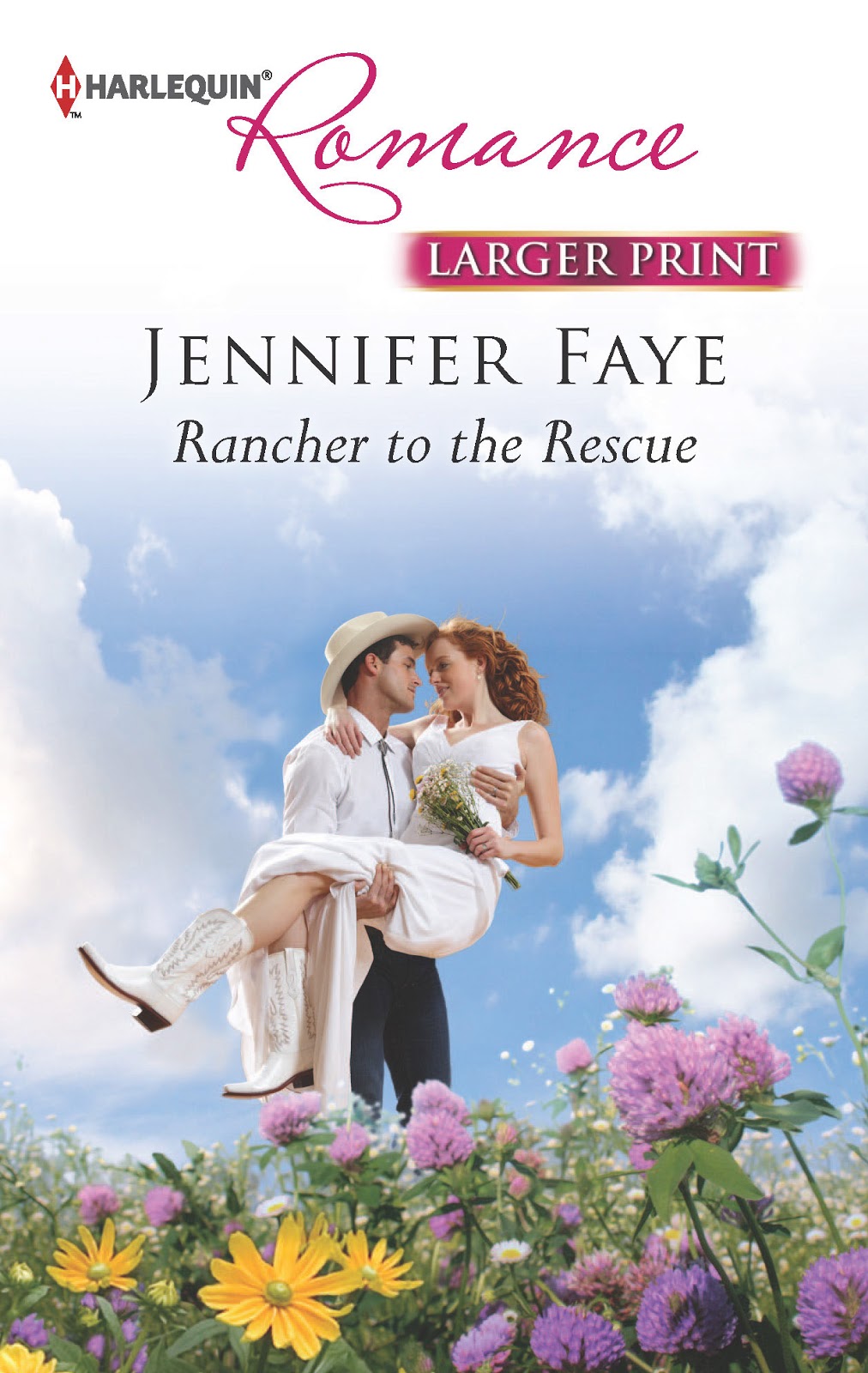
But most times, I can hit my deadlines. This month and next month will put me to the test as my debut, RANCHER TO THE RESCUE, releases July 1st and I embark on my first ever blog tour. It’s a little intimidating, a bit overwhelming and a lot exciting. :-)

And while all of this is going on, I’m back on deadline. So how do I beat the clock and get my newest manuscript turned in on time?

It all started years ago when I started doing NaNo. And it doesn’t hurt that I came from a background of statistical work which relied heavily on spreadsheets. So every time I have a deadline, I set up a spreadsheet.

I use a calendar format and make it big enough to encompass the beginning and ending dates. Then I simply add formulas to calculate how many words I write each day, how many words minimum I must write to finish by my deadline.


Since I’m sort of a #’s freak, I love updating the spreadsheet and seeing my percentage finished climb. When I’m writing, I generally update it each time I save my manuscript. What can I say? It’s the simple things that entertain me. :-)

How about you? What keeps you on track?


Jennifer Faye’s debut, RANCHER TO THE RESCUE, is available NOW at Harlequin.com. Or it’s up for Pre-order at Amazon & B&N. She’d love to hear from you via Twitter, her website, or Facebook.


Tuesday, May 7, 2013

Dirty or Clean...Draft?


by Jennifer Faye

When starting a new book, I’ve learned from experience that I need an outline to follow. Not an outline like you learned to do in school with the roman numerals and letters. No, what I’m talking about is more like a long synopsis. But sometimes I’ll included chunks of scenes. If they come to me in that moment, I’m not going to pass up a chance to record it. The only thing that my outline must have is chronological order. Anything about and beyond that is fine by me. It’s there to keep the juices flowing and remind me of where the story is headed. NOTE: my stories/characters don’t always play along with the outline. Detours are not uncommon, but they don’t detour too far from the program and eventually they meander back to the outline.

Next comes the first draft. I must confess that I thought I wrote messy, dirty drafts, but I’m coming to learn that they aren’t so messy after all. My scenes, for the most part, are in the right order. Once in a while, I jump the gun and have something happen too soon. That’s when my wonderful editor taps me on the shoulder and suggests I move such and such later in the story. And generally she’s right and it strengthens the story.

BUT, and yes, that’s a big but, the first draft of my first chapters is usually very messy. I don’t know how else to dive into the middle of characters’ lives without just throwing down words and seeing what happens. In the opening chapter, I move scenes around. I move dialogue around. I change settings, weather, days of the week, POV’s. You name it, I probably change it. By chapter two, I’m usually cooking with gas and know where I’m going. Things are really picking up by now. ;-)

As such, I am in awe of those writers who can sit down and write clean first drafts the whole way through. Now, I’m not referring to those people who write a page or two and then tinker with it until it shines before moving on, but rather I’m referring to the people who sit down and write really clean drafts from the get-go. Those are the writers who only need to do light editing before submitting. I actually know some of those people and they amaze me.

How about you? Are you a messy writer? Or a clean one?


Jennifer Faye is hard at work on book #3. Her debut, RANCHER TO THE RESCUE, is available for Pre-order now. She’d love to hear from you via Twitter, her website, or Facebook.


Monday, February 18, 2013

Mechanics on Monday: And they (probably) lived happily ever after, by Tina Vaughn

My job as a writer is to fulfill readers' expectations. In romance, this means at the end of the day–or in this case, the end of the book–I must provide an emotionally-satisfying and believable happy ending. Sounds simple, right?

Um. Not so much. For me, the ending is one of the hardest scenes to write. And if you're searching for advice on how to write the perfect ending, well…good luck. While there are tons of articles and books offering tips and step-by-step guidelines for the perfect opening, advice for endings is obscure. Why? Is it because we already know how a romance is going to end? Is it because endings are so subjective, depending entirely on our characters' and stories' unique conflicts and resolutions? Is it because the ending is easy to write, and I'm one of the few poor souls who just doesn't get it?

In preparation for this post, I re-read romances that feature some of my favorite endings. I also re-read a few that, in all honesty, just didn't work for me. I also read the endings to my own novels. As a reader and writer, what do I want, expect and need in an ending for me to consider it emotionally satisfying? Reading endings with a critical eye allowed me to come up with a simple five-element list for crafting fabulous and believable endings.

Dialogue

I like my endings dialogue-heavy. No summaries. No sweeping expositions. No long internal monologues featuring self-analysis, please. This is my last chance to “hear” these characters' voices. While saying I love you is key, it's not the only thing that needs to be said.

Setting

Setting showcases your characters' strengths and weaknesses. And just because we've reached the ending of a novel doesn't mean we can ignore it. In all likelihood, the setting has added depth and dimension to your characters throughout the novel. Why stop now?

Characterization

Loves makes people do strange and crazy things, I know. But in novels, stranger and crazier isn't always better. Be sure that any romantic gestures are in keeping with the characters' personalities, otherwise the ending becomes overly-dramatic, unbelievable and might induce an eye-roll.

Pacing

Since we're wrapping up the book, the ending should wind us down, not wind us up. Didn't we get all excited during the climax? Now's the time to slow things down a little. Use sentence structure, punctuation, word choices, etc., that slow your pacing and prepare the reader for The End.

Physical intimacy

For me, a convincing happy ending must include a nod to both emotional and physical intimacy. I need to know that the characters are connected on both levels. Our characters confessed their love. Awww. Will they seal it with a kiss…or something more? While physical intimacy doesn't have to be explicit, I think it should be implied, and absolutely should be appropriate to the heat level of your book.


You've just written–or read–a unique and beautiful story, doesn't it deserve an equally original ending?


As a reader, what do you look for in a happy ending?

As a writer, what are your tricks for crafting a perfect ending for your characters?

Monday, February 4, 2013

It's Groundhog Day...again by Jennifer Faye

This past Saturday the U.S. has this peculiar holiday known as Groundhog Day. I must confess those little creatures are cute but how in the world they got their own day on the calendar, February 2nd, boggles my mind. If you aren’t familiar with this unusual American tradition there’s a groundhog, Punxsatawney Phil, who sticks his head out of his hole and if he sees his shadow there’s six more weeks of winter. If he doesn’t see his shadow it means an early spring. Definitely a very scientific predictor.

And if you’re wondering how this ties into writing…well, I’m getting there. I promise.

This year I learned there are more groundhogs in the U.S. predicting the end of winter, who’d have guessed. Well, Phil predicted an early spring as did two other groundhogs. However, the one from Atlanta heartily disagreed. Hmm…3 to 1 vote for an early spring. I’m going with Phil, an early spring it is. J

Weather predicting aside, when I hear the words Groundhog Day, I think of the movie starring Bill Murray. If you haven’t seen it, it’s about a man who keeps reliving the same day in his life. No matter what he does it’s the same day. There’s no escaping it. Sometimes when I hit a rut, I joke that I’m stuck in Groundhog Day.

Hmm…now that I’ve been talking so much about the movie, I’m going to have to borrow it from the local library and watch it. *makes note*

Anyway, by now I know you’re scratching your head and wondering how this all relates to writing. Well, it does in a creative sort of way. When you are crafting a story, you have to be very aware that you don’t create a world in which your characters feel as though they are living out the movie, Groundhog Day. No one wants to read about someone’s boring, routine life day after day after day.

You want to start your book at the moment of change. When the H/h’s ordinary life becomes extraordinary…but within the bounds of reasonableness. For me discovering that moment is a lot of fun. What exactly will bring my character to that inciting moment? What exactly will cause the hero and heroine’s lives to intersect and never be the same again? The possibilities are endless and exciting.

For my July 2013 debut, “Rancher to the Rescue”, my hero and heroine have been taken out of their routine lives where the heroine is a cooking sensation on television and the hero is a sexy rancher. In the opening of the book, the heroine is a bride on the run and the hero unwittingly becomes her accomplice.

So how about your stories? How do you take the ordinary and make it extraordinary? Do you find it to be a challenge? Or are the prospects exciting?

Monday, January 14, 2013

Small Towns, Big Stories by Tina Vaughn


Setting is so important. The perfect setting can frame and showcase your characters' strengths and weaknesses. Your setting can add deep layers and meaning to the developing romance, heighten the sense of mystery and danger or accentuate heartwarming and heart-wrenching family dynamics. For me, nothing helps me achieve my writing goals like a small-town setting.

I'm fascinated by small-town dynamics…probably because I spent more than fifteen years as a community newspaper reporter and editor.

I love the dichotomy of citizens' public and private personas and how those differences fuel the gossip and "scandal" in communities, influence both personal and public decisions and, most important, impact personal relationships. These conflicts make for great tension in your writing, especially when they involve a hot hero and strong, sassy heroine.

There are three main reasons I enjoy writing, and reading, romances with small-town settings.
    • The small-town setting lends itself to certain tropes and themes I enjoy. Forced proximity, conflict of interest, leaving home, returning home, reunion romances, bad boy/good girl, etc. The list is endless.
    • The sense of community. Friends, family, personal history, gossip…I love all the characteristics (good and bad) of small towns and communities.
    • Creative freedom. I create fictional towns, which means I'm not bogged down with a lot of research. I have complete control over my own little corner of the world. (The control freak in me loves this.)

Do you live in a small town?

Enjoy reading or writing romances with small-town settings? Why?

 
And, since this is my first post of the year, I'll take the opportunity to wish you all a fabulous 2013.
Here's to a successful year!

Thursday, November 15, 2012

50,000 Words or Bust by Tina Vaughn

For the first time in my life, I'm participating in a special event for November's National Novel Writing Month. The goal: write 50,000 words in thirty days.

For a plotter/pantser like me whose internal editor is like an uncontrollable beast, this project seemed, not just a daunting task, but an impossible one. How could I do this? I'm the writer who's lucky to manage a consistent five hundred words daily, who edits a chapter before I can move on to the next, whose writing comes in fits and bursts and whose plotting consists of a coarse outline on the back of an old page of my desk calendar.

I'm also the writer who's always up for a challenge. So, I overcame those doubts and insecurities to register for a special event at Savvy Authors. That, my dear friends, was the easy part. Immediately after registering, the doubts and, dare I admit it, the panic set in. What if I couldn't do this? What if I failed? However, a stronger and more hopeful part of myself said quite firmly: What if you can?

I spent the better part of October plotting and planning and making preparations, which included writing a blurb, synopsis and detailed outline. Details, people. I mean as much information as I could include. Nothing was too small.

I developed a desktop filing system where any ideas, bits of dialogue or scene ideas were kept in one spot and waiting for me when I was ready to write them.

I've learned to write at least twice a day, early mornings and late nights, in order to make sure I meet my daily writing goals.

My organizational skills have improved, even on the home-front, as I keep up with any and all outside commitments (my daughter's ballet classes, PTO meetings, outings, fundraisers, etc.) and adjust my schedule to accommodate writing time so that I can meet daily word or page count goals.

Since November 1, All I've done is write. No editing. No re-reading. Only writing. And I'm proud to say I've written around 27,000 words.

So far, my experience has been a positive one. I went from panic to excitement in just a few weeks. Paradoxically, I've found a writing structure and freedom in this challenge – and, for that, I am truly thankful.


Have you ever pushed yourself to move outside your comfort zone?

What did you learn?

Monday, October 29, 2012

Mechanics on Monday: Backstory vs. TMI, by Natalie Charles


It's not easy being omniscient. When I set out to write a book, I know a lot about my characters and their baggage. From the very first line of the book, I know what secrets my hero and heroine are hiding from each other, and I know how these secrets shape their biases and interactions. I also know that I have to thread their secrets carefully into the narrative, slowly unraveling them rather than committing the dreaded Info Dump. Dumping information will slow down my narrative, after all, and discourage a reader from continuing with the story. Why read on if you know what's going to happen?

But Info Dumps aren't just bad form because they slow pacing. They're bad form because they're not realistic. They're socially weird, like that person you barely know who tells you about her embarrassing medical problem. I don't want to learn about anyone's gynecological history while standing in line for coffee, and my readers don't want to know in chapter one that my heroine really does want to fall in love, deep down, but fears rejection after her fiancé jumped into bed with another woman days before the wedding. That's all too much information for a first meeting.

Besides, let's get real: do any of us know, I mean really know, why we behave the way we do? Don't most of us react first and analyze later? To get a better perspective on my current work in progress, I started thinking about what I might look like as a romance heroine and how my backstory might read. My youngest brother is a childhood cancer survivor, and going through that experience with him has changed my life. His cancer was suspected of being environmental, so it's the reason I became a lawyer and now work in the public interest. It's the reason I ran two marathons and write even when I don't want to, because I saw my healthy, athletic brother's life change in an instant and I know I only have today. I'm sure that experience of visiting the children's cancer wing of the hospital—of seeing infants with tubes in them and hearing about a child my brother's age dying in the room next door—I'm sure that has affected me in ways I don't understand. It's colored my entire worldview and changed who I am. But I would never tell anyone about it unless it was relevant. It's simply too much information for a first chapter or a coffee line.

So let's go to my current work in progress, where I have a heroine who is genuinely warm, engaging and sensitive at her best and melodramatic and haughty at her worst. She is also fiercely independent, which can be either good or bad. Upon first meeting, my commitment phobic heroine may not consciously be aware of why she viscerally hates the hero. Rather, she will throw up defensive rationales that correspond with her worst tendencies: he's invading her territory, he's threatening her happiness, he's hurt her in the past and he's a big fat jerk. But then hero surprises her by being decent and by revealing a little bit of himself that changes her impression. When her initial theory of him fails, she is forced to look inward and to figure out how she could have been so wrong. This is when she realizes that she is very attracted to hero. All of her other knee-jerk reactions—he's a jerk, he's on my turf, etc.—protected her from having to deal with the real pain he stirred up: she is attracted to him, but her fiancé cheated and she doesn't want to be hurt again. That's the core of her pain, but it's not something that comes out until later in the book.

My point is that our real life baggage affects us in ways we don't always understand, and our responses as a result of that baggage are not always logical and orderly. People are complicated. The challenge of writing compelling characters is to make them human: to bring them on a journey in which they will come to understand their own history and how it has prevented them from being their best selves. Just as we don't always understand our responses to situations and people, our characters shouldn't, either. That's what will make them fascinating and wonderful and, ultimately, people we want to spend more time getting to know.

Friday, October 26, 2012

About Us: Tina Vaughn

Have you enjoyed getting to know the ladies of The Hot Pink Typewriter a little better? I know I have...except, now it's my turn in The Hot Seat, and I'm a little nervous. *gulp* So pull up a chair, grab some coffee or a cocktail, and let's chat. Just in case you need some incentive, I may mention Damon Salvatore and Daryl Dixon somewhere in this post. ; )

How and why did you get involved with The Hot Pink Typewriter?


Natalie Charles and Olivia Miles approached me (first through Twitter and subsequently emails) about this idea they had for a group blog. I was immediately excited to be included in this lovely group of talented authors I admire and respect. I also loved the idea of sharing our ups and downs, knowledge and experience and creating an atmosphere where we could meet and make new friends who enjoy reading and/or writing romance as much as we do.

What sub-genre of romance do you write and why?


I write steamy contemporary novellas and category-length romances, though I read across the romance sub-genres. I think I gravitate toward contemporary because of my years as a newspaper editor, where I focused on current events and pop culture. I just have to know what's going on now!

Did you always know you wanted to be a writer? What prompted this interest?

 
I did. Some of my earliest memories are of reading fairy tales. But, while other girls my age pretended to be princesses, I wanted to be Lois Lane. I remember poking the lenses out of an old pair of sunglasses, wearing them and scribbling in a little notebook, then writing my stories on my Winnie the Pooh typewriter. Seriously, I was three or four at the time. I also had a weird obsession with red lipstick, but that's for a different blog post, I think.


Did contests play a role in your writing journey? If so, in what ways did you find them beneficial? And what, if any, were the drawbacks?


Yes. No Sweeter Love was actually published as the result of a contest. I didn't win, but the editor who was judging requested my manuscript. I also met a lot of my writing friends (The Hot Pink Typewriter ladies included) through online contests. Personally, I've not experienced any drawbacks with contests, but then again, I've never approached a writing contest as if it's a competition. Does that make sense? I can imagine contests being very frustrating if your only goal is to win – and then you don't. As long as a writer thinks of the contest as a learning experience and chance to network with other like-minded writers, then I don't see a drawback.

What point are you currently at in your writing journey?


 I'm still writing. Still submitting. Still sitting on pins and needles and obsessively checking my email inbox. Writing and publishing is such an exciting journey. I'm enjoying the ride.


Describe what makes a perfect hero for you. And what makes a perfect heroine?


I don't know why I think this is the hardest question. Ugh. I guess some of the basic must-haves for a perfect hero (at least for me) are strength, intelligence, wit and humor. Actually, those same characteristics apply to my heroines, as well. Together, I think they should bring out the worst and best in each other. Other than that, I just try to write characters that I can picture myself hanging out with. If I don't like them, who will?


What does HEA mean to you?


It means the hero and heroine are in love and will be together forever. I need more than the words “I love you,” though. When I'm reading, I need to feel that the relationship has been twisted, tormented and tested – that it went though an emotional zombie apocalypse and survived.


Where do you draw your inspiration from?


All around me. People, articles, conversations I overhear, beautiful scenery, etc. You name it. A great story can be found anywhere you look.


Name your five favorite movies/books, or those that have influenced you the most and how.


Pride & Prejudice

Mr. Darcy and Elizabeth Bennet, feminism, challenge to social conventions, a forbidden attraction, the crazy Bennet family and Pemberly. *sigh* What's not to love?

Jane Eyre

It's such a dark and passionate novel, and so progressive for its time. The push and pull of morality and sexuality, combined with the themes of gender and societal norms and expectations fascinates me. Every time I read Jane Eyre I feel like I'm reading it for the first time.

Gone With the Wind

I watched the movie before I read the book, and when it ended, I think I actually yelled at the television screen. I could not believe that Rhett and Scarlett did not get their happily ever after. I think I was severely traumatized and this could be the main reason I write HEA romance. I love the book, as well. There's a part where Rhett compliments Scarlett's eyes by comparing them to fish in fishbowls. I still die laughing every time I read that.

The Vampire Diaries

Teenage angst. Vampires. Love triangle. These books, but especially the television show, pushes all my hot buttons. Also, I have an unhealthy, and sometimes debilitating crush, on Ian Somerhalder as Damon Salvatore. Make of that what you will.

The Walking Dead

This is probably my favorite television show. Aside from the fact that I'm equal parts scared to death and fascinated by zombies, this is one of the best-written shows I've ever watched. Want a crash course in character development? Take a day or two to watch the series and take particular note of Daryl Dixon's character arc. I. Love. Him.

Tell us about your greatest writing challenges and how you work through them.

 
I'm a perfectionist. I also edit as I write. This really slows down the writing process for me and can be very frustrating. I also go through bouts of my writing is crap, though I try to keep myself out of the doldrums for any length of time, usually by enjoying a cocktail or two, eating some chocolate or reading a great book. There's nothing like a little break to get your creative juices flowing again.


What’s the best piece of advice you’ve ever been given?


“Prove you were there.”
When I was first starting out as a journalist, one of my first assignments was to cover a high-profile murder trial, and I was scared. While writing my article, I double-checked all the legal terms and quotes. I meticulously fact-checked every piece of information I used in my story, then I submitted it to my editor. She said: “this is great, but (oh, the evil but) you need to prove you were there.”
Huh?
“You could've written this from your desk,” she explained. “Show me you were in that courtroom.” And then I understood. I'd gotten so caught up in the black and white of the facts that I'd neglected the color. What were people actually doing in that packed courtroom that day? That little piece of advice always pops into my head when I'm writing. Have I set the scene? Have I used all five senses? Are the descriptions vivid and accurate?

What are your hopes and aspirations for your career?


The world is full of dark and depressing news. Fear and hate and worry. I want a reader to get lost in one of my books, forget their fears and worries for a little while, and smile.

Thanks so much for joining me.

Questions? Fire away.

I look forward to chatting with you.

Monday, August 6, 2012

What Skeleton is Rattling in Your Closet? by Jennifer Faye

This post came to me as I was hit with a set of editor-suggested revisions for my latest story. I noticed a similarity between this set of revisions and the ones I previously completed for another story.

The biggest thing I noticed was that I had laid the ground work for my H/h’s backstories, I’d hinted at it, I’d teased about it, but I failed to swing open that closet door and let their skeletons and the ghosts that haunt them into the full sunlight.

It was all there in my head. I’d plotted and outlined. Their backstories were all neatly filed away, but I failed to put it on the page. <sigh>

I think perhaps I was hesitant because I’ll admit it. <raising hand> Hi, my name is Jennifer. And I’m a recovering contest junkie. There I publicly admit it. *G* Anyway while I was entering contest after contest, I heard a lot of “too much backstory.” I’m betting a lot of you have heard the same.

The thing is the comment was meant for the opening chapter, which is the average length of an entry in a writing contest. However, if you hear something long enough, I think it subconsciously sticks in your brain. For myself, I must have computed: backstory = bad.

Not true!

I’ve got to retrain my brain into believing that the pertinent part of a character’s backstory is my friend—in reasonable proportions. However, keep in mind that you don’t want to bog down the reader in the opening chapter. But you want to disperse the background information as it pertains to the character in their current situation.

Our backstories mold each one of us. Think about your past and how it affects the decisions you make today. For example: if you hated peas as a child but you were made to sit at the dinner table until your plate was picked clean, even if it meant sitting there for hours, you probably don’t eat peas even now as adult. Even though as you’ve grown and matured and most likely your tastes did too, I’d be willing to bet you still don’t like peas. The mere reminder of being miserable at the dinner table will keep you from giving those green little marbles a second chance. Sure, this is a simplistic example but you see what I’m saying. Your past is always with you and will in some way help influence your future.

However, a good friend of mine reminded me to mention that as well as the skeletons, you should not forget the importance of a character’s Ghost—the unhealed part of the backstory, which is going to directly influence your story. These are the things the H/h long to keep hidden and will do everything in their power to hide, but you must unearth them if the reader is to understand and sympathize with them and their choices.

For example, Casablanca’s ghost is Rick’s affair with Ilse. NOT his backstory of being a gun runner.

Not all backstory is equal!

It’s the stuff that will make a difference that you want on the page.

So don’t be afraid of those ghosts in the closet—at least not the ones belonging to your H/h. *G* Embrace them. Swing open that closet door and air out those ghosts. They are your friends. They will help make your H/h into well-rounded characters. They will provide motivation for the H/h actions. And they will provide you with a beginning for your character arc.

BTW, this is my very first blog entry. Hope you enjoyed it.

Wednesday, July 25, 2012

Setting the Stage: by Olivia Miles

*Photo taken by Yours Truly on my last vacation.*
With most of the romance community at RWA this week, I've decided to give those of us "left behind" a little getaway of our own. I realized the other day that I haven't gone on a vacation or even left town in about two years - Yikes! It's a funny thing, but most of the trips I take these days are through my imagination. I've been so busy escaping to snow-covered main streets or rustic seaside towns that sometimes I am startled to look up from the computer screen and realize that I am sitting at my very own desk. In Chicago.

I've always thought that one of the greatest escapes in life is the simple act of sitting down with a good book. Without leaving the comfort of your own armchair, you can be transported into a whole other world. Well, the same goes for the writing of those books. As much as I love the idea of whisking myself away to a variety of exquisite destinations, as a writer, I do tend to write what I know it terms of location. Sure, I fictionalize the settings a bit and highlight some of the prettiest elements, but for the most part I draw on personal experience. Here's the thing, though: I only pick my favorite places - the places that inspire me the most. When I am immersed in writing a book set in that place, for a little while at least, I am there. And it's wonderful.

The real responsibility of the writer, of course, is to bring a story to life. This extends beyond the characters to include the backdrop. You have to transport the reader. I recently did a round of revisions on a book and as soon as I started going through it, I knew I had to change the location. Sure, the original location worked in the technical sense, but it really didn't add enough scenery to the story. Simply put, I wasn’t swept away. As soon as I changed that one element, I immediately knew that this was somewhere I wanted to be, and I paid special care in describing the sights, sounds, and even smells in a way that would evoke the same desire in someone else. After all, if a reader is going to invest a certain amount of time in the story, don't you think they want to make sure they really get everything they want out of their visit?

Here are a few things I consider when I am setting the stage:
  • Climate. What's the temperature like? What do your characters wear? What does the air smell like? Like crunchy leaves? Like snow? Like rain?
  • Architecture. Are the buildings made of stucco or stone? Tell the reader. They need to know where they are!
  • Landscape. What kinds of plants grow there? Are there rolling hills or flat, open roads? 
  • Sound. Is it a bustling city filled with honking horns or a beach town with crashing waves? What's going on behind the characters' words? 
  • Color. Nothing brings a story more to life than a vivid setting. What color are the flowers and the leaves? What color are the doors on the houses?

Hmm...doesn't this give a whole new meaning to that old saying location, location, location?

Monday, July 9, 2012

Mechanics on Monday: Save your words by Tina Vaughn


As I approach the editing phase of my writing process for my current project, one of my favorite rules is: save your words. The phrase is actually No. 1 on my editing checklist.
The checklist is a handy guide to editing my own work. I consider the checklist a flowing document where I constantly add to my list of self-proclaimed writing evils. It includes common mistakes I make while writing–things I know I'm not supposed to be doing but in the midst of a creative roll, when the words are flowing so well, I might not catch or notice them. This is why the list comes in handy. It contains everything from my favorite overused words to special formatting guidelines from my publisher.

For me, save your words means I need to do address at least two matters in my manuscript.

The first is redundant words or phrases. These are actions that repeat or duplicate themselves, often making parts of the phrases unnecessary.

Some examples include shrugging shoulders, nodded her head, sat down, etc.

For example:
Ryan shrugged his shoulders. Isn't “his shoulders” implied?
Ryan shrugged. Same meaning, fewer words.


The next is filler words. I've also heard them called tired words. They are often used as modifiers but add no real meaning.

For example:
He's very cute. I could drop very here because it doesn't add any real meaning to cute. Your “very” and my “very” could have two very different meanings. ; )
He's cute. Same meaning, fewer words.


That and then are two of my words to abuse. If you can drop that or then and keep the meaning of the sentence intact, you don't need to use either word.

For example:
I think that you should accept my invitation to dinner.
I think you should accept my invitation to dinner. Same meaning, fewer words.

If you go to the city, then I'm coming with you. (I recall my teachers hammering the importance of the if, then statement. My, how things change.)
If you go to the city, I'm coming with you. Same meaning, fewer words.

Cutting these small, but unnecessary, words throughout your manuscript will quickly add up and help you reach your ideal word count and even allow you some wiggle room for adding depth to scenes.


So do you have a save your words approach? What tips or tricks can you offer for deleting unnecessary or redundant words and phrases?